WHAT
is this all about?
WHAT
is this all about?
International
Mother Language Day, launched by the General Conference of UNESCO
in November 1999, has been observed on the 21st of February yearly
since February 2000, with an aim to promote linguistic and cultural
diversity and multilingualism, and to celebrate the world's 6,000
languages as intangible cultural heritage.
http://www.un.org/en/events/motherlanguageday/
The Language and Communication Programme of HKU's School of English marks International Mother Language Day, on 21 February, with projects by students of the course LCOM3001 Cultural Dimensions of Language and Communication on the language situations of various minority communities in Hong Kong.

HOW
is this relevant to Hong Kong?
While
Hong Kong may usually be perceived as a homogeneous, largely monolingual
context, there are in fact myriad other communities whose everyday
existence in Hong Kong involves a tension between maintaining their
mother tongues or traditional languages and acquiring or using languages
more dominant in the local setting, such as English, Putonghua or
Cantonese. These may be Hongkongers in different circumstances, such
as multilingual families or emigrant returnees (海歸派 hoi2 gwai1 paai3).
They may be minority groups in Hong Kong, which include not only traditional
minorities such as Tanka, but also new immigrants such as communities
from South Asia or Africa, or domestic helpers such as Filipinas and
Indonesians. They may also be communities facing language challenges
found in multilingual workplaces or in new media communication.
WHY
are we doing this?
 One
of the aims of this project is to remind ourselves and others of the
various less-thought-about multilingual communities in Hong Kong,
who face challenges in their communicative practices which involve
their mother tongue(s) as positioned alongside other languages of
global and local significance.
One
of the aims of this project is to remind ourselves and others of the
various less-thought-about multilingual communities in Hong Kong,
who face challenges in their communicative practices which involve
their mother tongue(s) as positioned alongside other languages of
global and local significance.
A broader aim is to raise
awareness amongst the university community and wider society of UNESCO's
International Mother Language Day (21 February) and the significance
of linguistic and cultural diversity, and to invite commitments for
next year's IMLD.
WHO
are the subjects of our attention?
Projects in 2016/17
From the Inner to the Outer of a Chiuchownese Family in Hong Kong
The Chiu Chownese community in Hong Kong is prominent and largely present in community affairs. Organisations such as the Federation of Hong Kong Chiu Chow Community Organisations and other similar ethnically bounded groups contribute greatly to upholding the roots of their culture; such as the Yu Lan Festival, also known as the Hungry Ghost Festival and the Chiu Chow dialects which are both listed as Intangible Cultural Heritage in Hong Kong. Focusing on a Chiuchownese family which has lived in Hong Kong for over thirty years and opened a restaurant specializing in Chiuchownese cuisine, we are going to look closer at issues such as the language shift within such family, the cross-generational changes in the usage of different languages, differences in family members’ attitudes towards Chiuchownese, and the role of the Chiuchownese restaurant in the promotion and preservation of Chiuchownese. Read more at https://langncom3001.wixsite.com/chiuchowcommunity By Cherie Chow Yee Ching, Jessica Fung Wai Ching, Joanne Pun Hay Lam and Natalie Yu Wing Tung.
Explore Chiu Chow
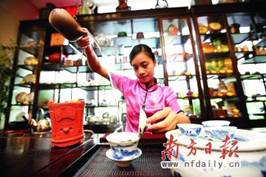
Do you know there is Chiu Chow Festival in Hong Kong to celebrate its language and heritage? Tycoon Li Ka-shing, singer Sammi Cheng, teen model Chrissie Chau and even HA chairman Anthony Wu Ting-yuk are from Chiu Chow. The Chiu Chow group has been one of the most powerful minorities in Hong Kong. Apart from Braised Goose, they have Kung-fu tea, folk arts and Chiu Chow variety. Some of those insist on speaking the Chiu Chow variety in this Cantonese-dominated city. What is the rationale behind? How do they preserve their traditions as well as the language within their community? Do the younger generation perceive themselves to be Hongkongese or ‘Chiuchowese’? Click the link http://cutiestgirlsever.wix.com/lmac to explore this amazing festival as well as the unique Chiu Chow culture and to know more about the people’s thought. By Jann Maelwa, Amy Lau Hiu Ching, Connie Mak Hong Nei and Louisa Tsi Hou Yee.
Linguistic Minority in HK – Thai
Adding to the work of the website “Tie to Fab Thai” established by a group of LCOM3001 students in 2012/13, this year we will continue to look at the fascinating Thai language and culture by interviewing a Thai-Hong Kong family: the Thai mother has married a Hong Kong man and moved to Hong Kong; her two children were born in Macau and raised in Hong Kong. Interestingly, one of them, being half Thai in blood, only perceives Thai as her sixth language although Thai is the first language in the first generation. Through gauging the dynamics of their identity construction and language choice at home and in different social circles and settings, we investigate the reasons behind such language shift within the family. Using the situation of this Thai-Hong Kong family as a case in point, we also aim at exploring whether our society is supportive of the use of the mother tongues by minority groups so that they could, like their Cantonese-speaking counterparts, enjoy such freedom and right in different domains including work, entertainment and education. Read more at http://linguisticsminorit.wixsite.com/thai By Chin Pui Lam, Clover Chung Sze Lok, Janice Ke Yue Ying and Tiffany Ong Sze Nga.
Language Choice Across Generations of Thai-Chinese Families in Hong Kong
Since the 1970s, a number of Thai and Thai-Chinese women immigrated to Hong Kong due to economic benefits and political stability. Since then, mixed-marriage between them and Hong Kong men has become very common. Their children are born and raised in Hong Kong. They go to local schools, where Cantonese and English are used as the medium of instruction. This has a great influence on their language repertoire, despite the fact that they often speak Thai at home. Since Thai is not a dominant language in Hong Kong, it is rarely used between the daily conversation of the second generation of Thai-Chinese and the local people. Thus, the language choices across generations within these Thai-Chinese families are varied. Our study investigates and compares the language choices in different contexts across generations in Thai-Chinese families in order to understand and reflect on the phenomenon of language shift. Read more at https://thaichineselanguage.wordpress.com By Kristy Lam Ka Wai, Christy Li Wai Chu, Tiffany Wong Tsz Yan, Lee HoiYan.
Homekongers
Having known that one of our group mates has identified herself as a HongKonger despite being an Indian and not speaking Cantonese, we found that it would be an interesting topic to explore more into the Indian community in Hong Kong. We will investigate if there are any differences in self-identification across generations and also the difference in language proficiency and attitude towards their home language. We will also investigate if there are any differences in identity construction if the interviewees study in local and international schools as well as their parents. Their opinions on language will also be assessed in the hope of analyzing how language affects identity and most importantly, we would like to know if they identify themselves as immigrants in Hong Kong or true HongKongers. Read more at https://alvin3192.wixsite.com/website By Alvin Kwok Chu Fei, Edwina Lee Tsz Ching, Kanishka Seth and William Chan Sai On.
Preservation and Promotion of Cantonese in Hong Kong via Social Media
“Lunch today ho mm ho?” Perhaps you’ve seen something like this on the internet, or even, your own daily texts. Like all languages, the Cantonese language in Hong Kong is constantly changing and has developed its own very kind of variety not seen anywhere else, especially with the younger generation having a variety of outlets, namely social media, in which to express their creativity and thoughts. Though this freedom of expression is commendable, there are those who claim that this ‘type’ of Cantonese is in fact a threat to what is the ‘official’ or ‘proper’ way of speaking/ writing. In fact the education bureau is trying to promote Mandarin teaching as a means of ‘reforming’ Chinese education. So the question stands, can the internet, namely social media platforms, be a utility for Cantonese speakers in Hong Kong to try to preserve and promote their heritage language against the pressure, criticism and “threats”? Read more at https://lcom3001canto.wixsite.com/preserve-promote By Clarice Choi Yuet Ching, Therese Bagui and Carey Wong Lai Hung.
Projects in 2015/16
Chiu Chou: “Jak bung”- Let’s eat!
Hong Kong is an international city where Cantonese and English are the major dominant languages used by the locals. With China’s growing economy, the use of Mandarin has also increased significantly in Hong Kong, but the number of speakers of many other Chinese languages such as Chiu Chou is in decline. Through in-depth interviews with Chiu Chou Hongkongers of different generations who moved to Hong Kong for education or employment, our group aims to investigate the language choices of the Chiu Chou community and their social identity, as well as understand the reasons for the shift away from their vernacular. We focus on their language choices in different contexts and settings such as family gatherings, workplace, i.e. Chiu Chou restaurants, schools, and social activities. What language would they use to communicate with their family members? Do all Chiu Chou people know how to speak in Chiu Chou? Do they encounter any language barriers when they interact with local people in Hong Kong? Read more at http://lcom3001chiuchow.wix.com/chiuchow By Dorothy Fung Lok Yin, Charmaine Lau Oi Yan and Carmen Jessica Wong.
Shanghainese in Hong Kong: An analysis of language shift
Our project focuses on the Shanghainese community and language in Hong Kong, particularly the issue of language shift. Through this project, we hope to raise the awareness of Shanghainese as a minority language in Hong Kong and probe the possibility of its continuity across generations. Data will be collected through interviews with and observations of Shanghainese from different generations, with the aim of establishing the situation of the community’s language shift, in line with their adaptation to more dominant language(s) in Hong Kong (Cantonese, English or Mandarin), and the motivations behind this shift. Read more at http://mlls1216.wix.com/lcom3001shanghainese By Nicole Ka Hsuan Choi, Michelle Lok Sum Lai, Candy Cheuk Man Lee and Candy Ka Po Lee.
Identity construction: Pakistani students in Hong Kong
According to the 2011 population by-census, amongst the 451,000 ethnic minorities settling in Hong Kong which constitute around 6% of the whole population, Pakistanis comprise the 5th largest group, with 18,042 in residence (Census and Statistics Department 2013). The major reasons for their settlement in Hong Kong, especially in the early history of Hong Kong, involve military service, labour, trade and the civil service; nowadays, a high proportion of them are born in Hong Kong. With the fast growing development of Madrasah schools (i.e. for Islamic religious instruction) to accommodate the rising Islamic population (from 1.1% in 1999 to 3.11% in 2011) in Hong Kong, we find it interesting to investigate the effect of learning environment on Pakistani students’ identity construction in Hong Kong. We compare the sense of identity of two groups of Pakistani secondary school students – those studying in an Islamic school and those studying in a local school, given that their respective language use is primarily different. Apart from this, many Islamic schools teach the students to remain faithful to the Islamic tradition by studying and memorising Quran after school, while local schools offer none or other religious education. While we are aware of the fact that one’s learning environment is not excluded from schools alone, we would like to focus on how the differences in academic environment can influence one’s language acquisition as well as identity construction. Questionnaires and interviews will be conducted for us to get both a general attitude of how the students view their sense of belonging, as well as an in-depth reflection on their identity construction and possible transformation. http://lcom3001project.wix.com/pakistanistu By Kelly Anastasia Cheuk, Willis Chow Lok Man and Mandy Wong Yuen Fung.
Looking into the African community in Hong Kong
Is there an African community in Hong Kong? Africans are in fact one of the most underrepresented minorities in Hong Kong, so much so that they are often seen as one homogenous group, even in academic studies on the African presence in Hong Kong. This goes against our knowledge that Africa is a diverse continent full of different ethnic groups, languages, and cultures - and these differences are definitely felt within the continent. In our study, we aim to find out if these differences are felt by Africans once they arrive in Hong Kong. Do they have common languages? Do they face the same struggles? How do they perceive their own identities in Hong Kong? To answer these questions, we interview people from different parts of Africa who are now in Hong Kong taking up various occupations. Ultimately, our aim is to find out if an “African community” really does exist, or if the term needs to be revised to truly reflect the diversity of the African continent. Read more at http://lcom3001capstone.wix.com/lcom3001africans By Sehrish Iqbal, Charis Kong Chi Yan, Karina Leung Ka Wing and Noman Mohamad.
Status of a minority language in Hong Kong: French
When the term “ethnic minority” is used in Hong Kong, it is usually correlated with Southeast Asian groups, low economic power, and low social status. Yet, how many would think of a European community, let alone the prestigious French? The French community in Hong Kong does not fit into the stereotypical “minority” glove. However, does this mean that they face no difficulties as an immigrant at the other side of the world with a completely different culture, language and cuisine? Numbering 18,000-20,000 in Hong Kong, the French community has increased by 5% over the last five years and there are roughly 800 French companies operating in Hong Kong. We investigate how the French face the situation of fitting into Hong Kong society and dealing with linguistic barriers and cultural differences. Furthermore, French is a popular language to learn, which raises the question of whether this popularity helps the community feel more at ease in Hong Kong. We investigate whether the status of a language helps put its people in an advantage after immigration. As a country with a long history of art, culinary, and linguistic heritage, France has a high position in the heart of most. However, as the French move to a new place, has this status remained? Overall, we look into the relationship between language and the cultural identity of the French in Hong Kong through observation, interviews and studying secondary data. Read more at http://langcom3001.wix.com/frenchcommunity By Becky Chau Yuk Yi, Carrie Cheung Ka Sin, Evelynne Lau Choi Ni and Jamie Li Long Sang.
Projects in 2013/14
“You don’t look like you are from here.” “Oh! I am half English, half Chinese.” “Oh, me too, I am half Chiuchaunese, half Hakkanese!” This might sound like a joke, but nowadays do many still refer to themselves by their ancestral origin in Hong Kong? Seeing that Chiuchau is one of the most prominent Chinese dialects remaining in Hong Kong, our group is interested in studying how Chiuchaunese of different age groups use their dialect in different contexts and also how they identify themselves in Hong Kong. Moreover, we would want to find out whether there is a relationship between their identities and the usage of the local dialect. Last but not least, we also want to address the problem of language endangerment, and find out whether Chiuchaunese in Hong Kong are aware that their local dialect is being spoken less and less, and how they see this issue. Read more at https://sites.google.com/site/chiuchauneseinhongkong/ By Rachel Chan Cheuk Lun, Sharon Chan Cheuk Yan and Beattie Cho.
Have you ever noticed that Hong Kong is not only a shopping paradise, but a paradise of languages? In this cosmopolitan city, we are interacting with people of a rich diversity every day. While most of us speak comfortably with Cantonese, the official language of Hong Kong, how do the minorities make their language choices here? The first generations of ethnic minorities – Indian, Vietnamese and Filipinos -- will be our guests here, talking about their linguistic identities and how they position their mother tongue in this multilingual and cosmopolitan setting of Hong Kong. Interestingly enough, their attitude towards their first language has obviously impacted the language choice of the second generation here. What we think is that it's time to hear the voices of these special city dwellers! Read more at http://linguisticminorities.weebly.com By Joey Au Wing Man, Elaine Chan Yi Ying and Queenie Wu Ki Yan.
Since 1980s, there have been migrants moving from Mainland China to Hong Kong. Until 2011, these new immigrants who have resided in Hong Kong for less than 7 years constitute 2.5% of Hong Kong population. Though they are of the same ethnicity as Hong Kong people, they are considered a particular type of immigrant in Hong Kong as they speak Putonghua as their lingua franca. Living in such a different environment dominated with Cantonese and English, these new immigrants position themselves with a different identity in Hong Kong. How do these people, who do not speak Cantonese, adapt to the linguistic environment in Hong Kong? What is their language choice in different contexts? Due to the family unification policy, children of these immigrants may reside and study in Hong Kong. What difficulties may they encounter and what measures have been taken to support them? How do they position themselves and Putonghua in Hong Kong society? Read more at http://lcom3001immigrants.wix.com/newimmigrants By Clio Wong Lai Hung, Ruby Kan Cheuk Yan and Amy Kwok Yan Ying.
Our project focuses on the problems faced by the Nepalese community as a minority in Hong Kong in relation to linguistic and cultural diversity. Our subjects consist of Nepalese expats who work in the food and beverage and entertainment industries in Hong Kong, rather than the Nepalese who were locally born and raised. We would like to examine the dominance of Cantonese among the working Nepalese expats and if they receive the same pressure to learn Cantonese as students of linguistic minorities in local schools do. We would also like to find out whether there is any connection between the locally born and bred Nepalese and the Nepalese expats to see if any interesting results related to linguistic behaviour can be drawn. This covers topics including language shift and code-switching, language and multiple identities, language as resource or commodity, linguistic diversity and linguistic behaviour in multilingual workplaces. Read more at http://lcom3001project.tumblr.com/ By Chan Kin Sing, Michelle Chan Ka Hay, Irene Hau Chi Shan and Chris Ma Ka Chun.
In this project, we investigate the language and identity issues of African community workers in Hong Kong. Our subjects are two executive members of African Community Hong Kong (ACHK). By looking into their language uses in different domains, language shift and change in cultural identity over generations, we conduct an in-depth exploration of the correlation between language and identity. First, we demonstrate how language plays an influential role in shaping one’s self-perception of cultural identity. We then illustrate how language comprises linguistic capital that enables speakers to construct his own identities. Read more at http://lcom3001website.wix.com/africancommunityhk By Kwong Oi Yee, Sara Mcbride, Samson Wong Ki Sum and Lord Yeung.
Known as “Asia’s World City”, Hong Kong is home to a large variety of languages due to its unique geographical and political status. In the past decade, Hong Kong’s booming economy has attracted a large amount of immigrants including those from Mainland China and overseas countries. With the increase in immigrants, the workplace setting has slowly evolved to adopt a multilingual environment as to accommodate various employees. It doesn’t matter if you work in McDonalds or an investment bank, it is expected for employees to have basic knowledge of Cantonese, Mandarin, and English. Our website will focus on investigating multilingualism in the workplace setting including identifying whether multilingualism is an asset or a liability, the value of various languages used in the workplace, alongside the use of code-mixing in a range of different industries in Hong Kong. Read more at www.multilingualisminhk.wordpress.com By Hui Yi Fong, Hui Ying Fong and Mia Qi Qi.
Projects in 2012/13
In a cosmopolitan city like Hong Kong where Cantonese and English are the major dominant languages used by most of the people, there are actually some minority languages still in use by village people in the New Territories. Through an indepth exploration of a Hakka-speaking group, this website aims to investigate the value of this minority language to different groups of people with various backgrounds and to understand the reasons behind for its endangerment in Hong Kong. To sum up, or ultimate target for this project is to raise the awareness of lay persons on the issue of minority languages and value of multilingualism because language can act as a representation of identity in this global world. Read more at http://lcom3001-exploringahongkongminor.weebly.com/ By Constant Chan Long Hin, Yvonne Chow Hok Kwai, Vanessa Man Fung Nga and Shelia Ng Hei Men.
Hakka was brought to Hong Kong in 1700s by Chinese immigrants from Northeastern Guangdong, one of the indigenous communities in the territory. Though nowadays considered a minority language, the Hakka from Guangdong have been well-recognized and have been the predominant variety of Hakka in Hong Kong, with abundant cultural and linguistic data documented in archive. The majority of its speakers are monolingual. Another Hakka-speaking community from Guangxi in Hong Kong, however, receives much less attention from Hong Kong people. The Guangxi Hakka community might be regarded the minority variety of Hakka in Hong Kong, whose speakers, hypothetically in the face of social isolation, are under pressure to acquire the dominant language in Hong Kong, Cantonese – this is a phenomenon not observed in the majority of Guangdong Hakka speakers in Hong Kong. Our project aims at exploring the sociolinguistic factors that might have resulted in the differences in the degree of motivation of language shift exhibited by the two groups, and at investigating how language shift happens in correlation with such social factors as social isolation. Read more at http://vanustam.wix.com/minorityofminority By Hannah Kung Wai Han, Ken Mong Ka Yin, Vanus Tam Wai Ying, and Emmy Tang Wing Yan.
Why are there scores of Nepali in Hong Kong? Are they foreigners? No! They are indeed Hong Kong permanent residents! What's more, they are the "Offspring of Gurkha" whose ancestors once served? as troops who protected Hong Kong during the colonial period under the British rule. Gurkha soldiers first gathered in Hong Kong in 1948 and many of them put down roots in Hong Kong ever since. Nowadays, the second and third generation communities are concentrated in Yuen Long and Jordan. Want to explore more about their community? We have done a home visit with a local Nepalese family and site investigation of their community, aiming to offer you a unique experience of the Nepali community on their history, education and acquisition of language, as well as their interaction with the local community. You can also figure out the answer on how they form such a strongly-bonded community in Hong Kong and preserve their own language -- Nepali. Are you ready to explore? Let's start our journey… Read more at http://puichichiu.wix.com/lcom3001-nepalese By Maggie Chan Yuk Kei, Uchi Chiu Pui Chi and Tai Ching Lam.
Thais in Hong Kong form a prominent community in Kowloon City through the establishment of their business, such as restaurants and Thai grocery stores. Although Hong Kong is a multilingual society, many Hong Kong people do not speak Thai. Which language do they use when doing business? When do they use Thai while living in Hong Kong? Do their young generations speak Thai as their mother tongue? What are the factors that determine their language choice? Do they come up with their own terminologies based on their repertoire? Unlike English and French, the Thai language is not established as a subject in our local schools. For tertiary education, a Thai department can only be found in one out of eight UGC-funded universities. If this is the case, how do the Thais identify themselves in Hong Kong? How do they think they are perceived by the locals? Is Thai an inferior language to speak in Hong Kong? Do they feel that learning a new language, i.e. Cantonese or English, for living in Hong Kong implies the loss of their cultural roots? Read more at http://hkulcom3001thai.wix.com/thais-in-hong-kong By Decem Poon Sin Ying, Janisa Hui Tung Yan and Teresa Lee Nok Yan.
In Hong Kong, about 95% of the population is ethnic Chinese while the remaining 5% of population are minority groups predominantly from South Asia. One of the biggest minority groups is Filipino. There are now approximately 140,000 Filipinos in Hong Kong, and, although a large majority of them work as foreign domestic helpers, there are still a noteworthy number of Filipinos who work in service industries and professional services. How do the second and even third generation Pinoys in Hong Kong, who do not work as domestic helpers, identify themselves? Which language(s) do they use in workplace? What are their attitudes towards their own Filipino dialects, Tagalog and English? Is code-mixing a common phenomenon among Filipinos in Hong Kong? If yes, which languages are usually used in code-mixing? If you find these questions interesting, please find at more about it at http://www.filipinosinhk.blogspot.hk/! By Onyee Cheng, Haley Pau Ying and Ingrid Yu Wing Ka.
Since the 1970s, there has been an influx of domestic helpers to Hong Kong, of which the Philippines is the largest group. Since their mother tongues are neither English nor Chinese, we are interested in their use of languages in various contexts in order to accommodate to the multilingual environment of Hong Kong. We also observe that there is a growing need for Filipino domestic helpers to acquire Cantonese as a competing criterion to work in a local family. Read more at http://hkulcom3001.wix.com/lcom3001 By Denize Chan Lok Man, Helen Law Shuk Ching, Alice Lee Hiu Yan, Jennifer Li Hang and Yeung Hoi Yu.
According to the statistics released by Census and Statistics Department in 2012, there are around 133,018 Filipinos currently living in Hong Kong, which is about 30% among all ethnic minorities in Hong Kong. They work in different industries with mostly using English as a daily language to communicate. At the same time, there are around 149,809 Filipino domestic workers in Hong Kong who actually speak various dialects from different regions in the Philippines. But after they come to Hong Kong, they have to switch their language to one common language, which is Tagalog, for communication within the ethnic community. What kind of language problem they encounter in daily lives regarding these two groups of Filipinos? How would they define their identity with language preferences? While living in the Chinese city, how would they consider their sense of belonging regarding their languages? We believe that language shapes one’s identity. While we consider the constant shift of languages among Filipinos, both domestic helpers and other residential Filipinos, in working sphere to family, the construction of identity of Filipinos in Hong Kong is definitely an interesting topic to study. A contrast of language preference between these two groups of Filipinos will be presented through our case study. Followed by interviews and survey, a broader image of language performance of this minority group in Hong Kong will be projected. Read more at http://lcom3001.wix.com/hkfilipinos
By Yanessa Fung Chung Inn, Trista Lam Pui Ching, Catti Lee Shuk Ting, and Emily Mak Yee Man.
With a population less than 0.4% in Hong Kong, the African community is relatively more ‘minor’ than other more prominent minorities groups such as India, Pakistan, Filipinos, Hakka or Teochew. Our group aims to investigate the relationship between language choice and social identity of the African community in Hong Kong through conducting in-depth interviews with two African interviewees who have immigrated to Hong Kong for quite a number of years and have been working as retail traders. We focus on their language choices in different context and settings such as workplace, family gatherings with locals, and social activities. We also study the effect of intermarriage on their social identity and language preference. What language would they use to communicate with their family members? What language would the African parents like their children to acquire? Do they encounter any language barriers when they interact with other local people in Hong Kong? Subsequently, we investigate how the African community identify themselves in Hong Kong society, relating their language choices to their social identity. Read more at http://lcom3001african.wix.com/african-community By Katherine Chan Ki Yeung, Cassy Chau Ka Yi, Holly Wong Ho Wing and Elaine Wong Yuen Shan.
Hong Kong is known to be one of the world’s most international cities, valuing cultural diversity as well as preserving its local cultural heritage. There are many opportunities in this globalized community for people to migrate to English speaking countries at a young age, in order to receive native English education. Many decide to return to Hong Kong for tertiary education or work. The interaction between the two languages and cultures that these individuals experience creates a unique blend of language attitudes and identities. To what extent do they view themselves as Hong Kong Chinese? Are they balanced or passive bilinguals? These identities and attitudes may also shed light on the issue of intergenerational language shift. This project aims to examine the attitudes towards and proficiencies of Cantonese and English in "overseas Hong Kong returnees", and the relationship this has with their language identities. Read more at http://overseashk.tumblr.com/ By Kazusa Go, Angel Koh Si En, Kimberley Lam Seo Yun and Ron Tsui Long Yin.
Projects in 2011/12
What makes a person living in Hong Kong ‘local’? A Chinese face? Fluent Cantonese? According to the 2011 Census, almost 50,000 Indians and Pakistanis now reside in Hong Kong. However, in many ways the social practices and policies in Hong Kong are not well-catered for such minority groups and often their needs are overlooked. Delving into the fundamental issue of language, we asked questions like: Is the language that a South Asian uses with his parents the same as the one he uses with his grandparents, siblings, and friends? What factors affect their choice of language? What attitudes do they hold towards Cantonese and their heritage language? Are there differences across generations? How does this affect their integration into Hong Kong society? Through interviews with four multigenerational South Asian families, we get a closer look at the impact language has on each of their lives. Read more at http://www.wix.com/walk_tha_walk/southasiansinhk. By Amanda Leanne Chan, Yolanda Chan Sze Ting, Emily Tang Wing Man, and Sophia To Chi Yin.
Here's a brief history of Hong Kong Hokkiens. Due to political instability in China during 1930s and 1940s, a lot of Chinese immigrants came from the mainland to Hong Kong. Among them were the Hokkiens. Time flies and their grandchildren have been mostly born and raised in Hong Kong. Apparently, the community has been assimilated into the Cantonese-speaking Hong Kong family. How do they identify themselves? Do they still speak Hokkien? Interviewing two Hokkien families, we are going to investigate into the language maintenance, shift and attitude of Hokkien in Hong Kong across three generations. Read more at http://hokkien-in-hk.blogspot.com/ By Mandy Lo Man Yan, Vicky Yuen Ching Man, and Yuffie Yu Suet Mei.
The Weitou dialect (圍頭話), a Cantonese dialect spoken in the south-eastern part of Guangdong province, is spoken by communities in Hong Kong’s New Territories’ walled villages – a type of large traditional multi-family communal living structure whose inhabitants are typically extended families or clans sharing the same surname. The Weitou dialect in fact is usually used in Hong Kong TV dramas and movies to characterise characters who come from these walled villages. Are inhabitants of the Weitou community striving to preserve their own language and identity, and prevent language shift and death? Is their local culture now mixed with outsiders, in the sense that villages are occupied by non-local people instead of local ones? Read more at www.codestudio.hk/weitou-community By Dora Au Yeung Wing Hang, Ivy Ho Wing Shan, and Joe Tsang Ka Ming.
One of the issues of greatest concern today in Hong Kong is how to prevent pregnant Chinese Mainlanders from rushing to Hong Kong for delivery. Obviously, this intensifies the tension and dilemma between Hong Kongers and Mainlanders. However, it also reminds us that Hong Kong is so attractive to Mainlanders that they would bear the risk of Dystocia and imprisonment. To understand why Mainlanders come to Hong Kong, particularly Hakka immigrants to Hong Kong, and how they make their language choices in such a multilingual and globalising context, a project “Mainland Hakka Immigrants in Hong Kong” is being conducted. Read more at https://sites.google.com/site/mlhkimmigrants/. By Candy Ip Hong Ting, Charles Fok Wai Chung, Kirsten Hennes and Warren Wong Tik Hung.
Projects in 2009/10
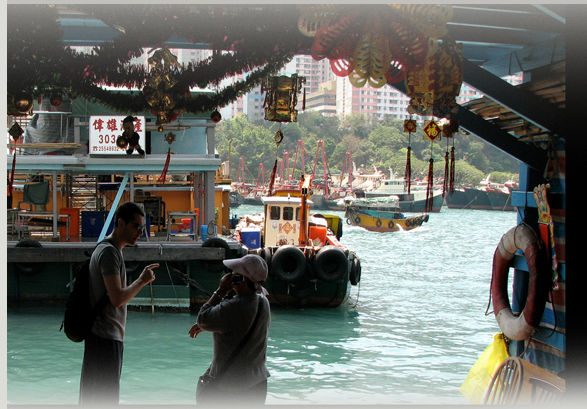
 The
Tanka community (蜑家 daan6gaa1), also known as the community of
fisherfolk or boat dwellers, is a traditional minority in Hong Kong.
The community is now facing language challenges with regard to its
mother tongue, such as language shift and possibly language death.
By examining the reasons for the threats to their language, as well
as the attitude of the Tanka community towards such a phenomenon,
we strive to draw people's attention to this linguistic minority and
consequently to the importance of cultural diversity. Read more at
http://tanka-community.blogspot.com/
By Vienna Ho Wing Lun, Carrie Lam Ka Yee, Jerome Ng Tik Lun, Phyllis
Wong Wing Sui.
The
Tanka community (蜑家 daan6gaa1), also known as the community of
fisherfolk or boat dwellers, is a traditional minority in Hong Kong.
The community is now facing language challenges with regard to its
mother tongue, such as language shift and possibly language death.
By examining the reasons for the threats to their language, as well
as the attitude of the Tanka community towards such a phenomenon,
we strive to draw people's attention to this linguistic minority and
consequently to the importance of cultural diversity. Read more at
http://tanka-community.blogspot.com/
By Vienna Ho Wing Lun, Carrie Lam Ka Yee, Jerome Ng Tik Lun, Phyllis
Wong Wing Sui.
Hong
Kong, as a multi-cultural city, is currently seeing a growing phenomenon
in these deca des dominated by the immigrant craze - mixed marriage,
where the non-HKers tend to face various languages challenges in different
cultural dimensions. As the minority community, what language(s) do
they use in daily life? What role(s) does their own mother tongue
play in their parent-child communication? What position and role does
Cantonese hold for them? How do they find themselves perceived by
the majority? How do they deal with language shift? Read more
at
http://imld-mixed-marriage.xanga.com/ By Cathy Cheung
Ho Long, Joanna Law Ting Yan, Dennis Li Ka Ho, Isabel Wu Sin Yee.
des dominated by the immigrant craze - mixed marriage,
where the non-HKers tend to face various languages challenges in different
cultural dimensions. As the minority community, what language(s) do
they use in daily life? What role(s) does their own mother tongue
play in their parent-child communication? What position and role does
Cantonese hold for them? How do they find themselves perceived by
the majority? How do they deal with language shift? Read more
at
http://imld-mixed-marriage.xanga.com/ By Cathy Cheung
Ho Long, Joanna Law Ting Yan, Dennis Li Ka Ho, Isabel Wu Sin Yee.
 In
today's globalized context, an increasing number of students study
overseas. Amongst the various challenges faced by non-local students
in HK, what are their difficulties in daily communication in a
non-mother tongue language environment? How do they solve the associated
problems? What are their attitudes towards learning a second/ foreign
language like Mandarin/ Cantonese? By Samantha Cheung Ka Man, Eva Choi Yee Wa, Wendy Choi Suet Fan, Carmen
Chow Ka Men.
In
today's globalized context, an increasing number of students study
overseas. Amongst the various challenges faced by non-local students
in HK, what are their difficulties in daily communication in a
non-mother tongue language environment? How do they solve the associated
problems? What are their attitudes towards learning a second/ foreign
language like Mandarin/ Cantonese? By Samantha Cheung Ka Man, Eva Choi Yee Wa, Wendy Choi Suet Fan, Carmen
Chow Ka Men.
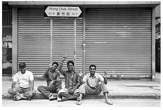 Ahmad:
"I've nothing, I'm helpless. Nobody supports me to rent another
flat." Ahmad's son: "我會同老師講我無屋企, 但好想返學 (ngo5 wui5tung4 lou5si1
gong2 ngo5 mou4 uk1kei2, daan6 hou2soeng2 faan1hok6)". They are
both Pakistanis, victims in the recent To Kwa Wan building collapse.
But - why did they respond to reporters in different languages? South
Asians are amongst the ethnic minority communities in Hong Kong,
multilingual, but with limited proficiency in spoken and written Chinese,
the dominant languages of the city. What are the factors determining
their language choice? What are their attitudes towards Cantonese
and their mother tongue? By Vicky Chiu Pui Wai, Carson Fung Ka Sing, Jessica Kung Shui Man.
Ahmad:
"I've nothing, I'm helpless. Nobody supports me to rent another
flat." Ahmad's son: "我會同老師講我無屋企, 但好想返學 (ngo5 wui5tung4 lou5si1
gong2 ngo5 mou4 uk1kei2, daan6 hou2soeng2 faan1hok6)". They are
both Pakistanis, victims in the recent To Kwa Wan building collapse.
But - why did they respond to reporters in different languages? South
Asians are amongst the ethnic minority communities in Hong Kong,
multilingual, but with limited proficiency in spoken and written Chinese,
the dominant languages of the city. What are the factors determining
their language choice? What are their attitudes towards Cantonese
and their mother tongue? By Vicky Chiu Pui Wai, Carson Fung Ka Sing, Jessica Kung Shui Man.
WHERE
can you view the projects?
|
Follow
the groups as they conduct their fieldwork, and blog about their
observations, with images and audio, by clicking on the individual
links above.
|
Contact:
Dr Lisa Lim lisalim@hku.hk, Coordinator, Language and Communication
Programme